Icy, wet, and unpredictable: skiing and snowboarding injuries in spring snow
It might not officially be spring yet (that’s 20 March), but spring snow and minor thaw conditions are already affecting our city streets and snow resorts. With daytime temperatures often above freezing and dipping into double minus temperatures below at night, it’s a prime time for icy conditions that makes sidewalks slippy and ski slopes fast and unpredictable. For hikers too, re-frozen snow can be an unexpected hazard that can cause serious falls.
Spring snow tips for skiing and snowboarding
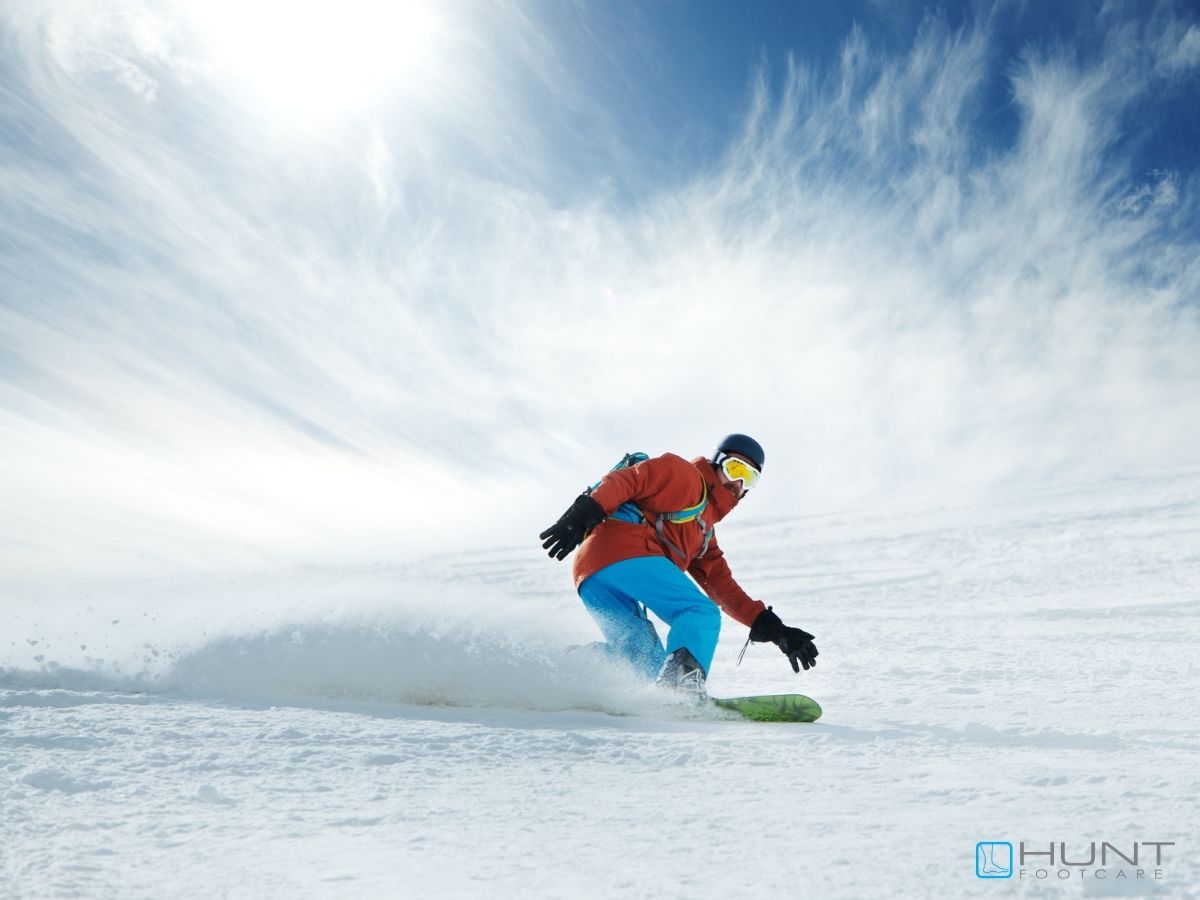
Spring freeze/thaw conditions can turn ski slopes into ice sheets that are hard, fast and difficult for inexperienced skiers or snowboarders. Most injuries in these conditions are caused by falls, although there is also an increased risk of collisions. Both can result in ankle, foot and knee injuries that can end your ski season at best, or see you lifted off the mountain at worst.
At Hunt Footcare, we help hundreds of local people with snow sports related injuries including skiing, skating, snowboarding, and sledging. That includes children too, who are often unaware of the higher risk at this time of year.
The best plan is prevention and preparation, so here are our top tips before you head to the slopes this spring:
- Check all your equipment is well maintained, especially bindings and the edges of skis and skate blades. If in doubt, get them checked, sharpened and serviced by a professional, and ensure bindings are properly adjusted to fit your boots.
- Get a professional to wax your skis and/or boards. A professional service can ensure skis and boards are properly checked, cleaned and evenly waxed to protect their base materials. You probably already wax your equipment yourself, but a professional will ensure a smooth, scratch-free finish and optimal thickness. Of course, newly waxed equipment will glide better and faster, so take time on gentle slopes to get used to those fresh-wax speeds before heading up the big hill.
- Wear a helmet. Helmets are not just for kids! If you do have a fall or collision, always check the helmet for damage and if in any doubt, replace it.
- Watch out for wet snow. Skiing on wet, heavy snow can increase your risk of ankle, knee and ACLs (anterior cruciate ligament) injuries as it is harder to turn and your muscles tire more quickly. The wet snow can also hide a layer of ice underneath, or be patchy, so you need to be constantly alert. Also, wet snow can interfere with the ski bindings release mechanism, and a ski may not properly release in a fall. (1)
Snowboarders strains and fracture
Thanks to the design of modern ski boots, skiers are more likely to incur lower limb injuries and especially soft tissue ligament tears, rather than fractures to their ankle or leg. However, snowboarders tend to wear a softer boot that allows some movement inside the boot, potentially causing twisting injuries such as lateral ankle ligament damage, or even an ankle fracture. If injured, your ankle will probably be painful, swell up and be bruised, and it’s worth following the RICE process (Rest, Ice, Compression and Elevation) while you pick up the phone and book an appointment with us!
At Hunt Footcare, our team can help you recover from torn ligaments and muscle injuries through a planned program of treatment and rehabilitation to get you back on your feet sooner.
It is important to get professional advice, as a painful sprain that doesn’t get better and/or won’t take any weight may actually be what’s known as a Snowboarders fracture (lateral talus process). (3)
Check your insurance
Before packing the car with all your gear, check your medical insurance cover, especially if you are travelling out of Ontario to another province. Make sure it covers all the winter sports activities you are doing, as some may be excluded. As one insurance expert said:
“If you’re doing things like heli-skiing or CAT-skiing, or skiing or snowmobiling in avalanche country, you really want to check and make sure if there are exclusions in your life insurance policy,” (2)
Ideally your travel insurance should include:
“Out-of-province protection provides coverage for ambulance, air ambulance, emergency dental coverage and other services not provided under a provincial health care plan.”
Once you’re back home safely, call one of our expert footcare clinics for an appointment to discuss your treatment and rehab for your foot, ankle or knee injury.
Hiking in spring
If your passion is hiking on lower slopes of the mountains, then take note of what an article on search and rescue in B.C. says:
“Spring is probably the most dangerous time of year as sun and warm daytime temperatures melt snowpack that can become hard and treacherously slippery as it freezes again overnight.” (4)
One of the main danger is that hikers slip on ice and then tumble down the slopes, unable to stop on the icy surface. As an executive from AdventureSmart commented:
“Think about your terrain choice really wisely, and the aspects and the slope, based on sun exposure and what that can do to the snow. Understand that these conditions vary dramatically in the spring. … Think about your destination, and it’s not the summit or the peak. Your destination is home.” (4)
Sports injuries treatment and rehabilitation with Hunt Foot Clinics Ontario
If you suffer any winter sports related injuries to your foot and ankle, don’t wait and hope it will get better on its own. Seek medical attention if required, or make an appointment at one of our three Ontario foot care clinics for expert advice and treatment options.
About the author
J.Craig Hunt D.Ch. is founder of Hunt Footcare, one of Southwestern Ontario’s longest providers of professional footcare and foot surgery consultation services. He is Past President of both the College of Chiropodists of Ontario and the Ontario Society of Chiropodists. Read more about Craig here.
—//—
SOURCES:
(1) Orthopedic Centers of Colorado. (2023, March 20). Wet spring snow increases the risk of ACL injuries for skiers. https://ccoe.us/news/wet-spring-snow-increases-the-risk-of-acl-injuries-for-skiers/
(2) The Canadian Press. (2023, April 6). Spring skiing? How to protect yourself financially against the risk of injury. CTV News. https://www.ctvnews.ca/calgary/article/spring-skiing-how-to-protect-yourself-financially-against-the-risk-of-injury/
(3) Roche, A. (n.d.). Ski and snowboard injuries. London Foot & Ankle Surgery. https://www.londonorthopaedicsurgery.co.uk/sports-injuries-fractures/ski-and-snowboard-injuries/
(4) Owen, B. (2025, April 23). Spring, icy snow bring danger to B.C. backcountry, outdoor experts say. Vancouver Sun. https://vancouversun.com/news/spring-icy-snow-danger-bc-backcountry